
Bavette flank steak explained: where the cut comes from, how it compares with flank and skirt, how to cook and slice it, and the best halal cuts to buy.
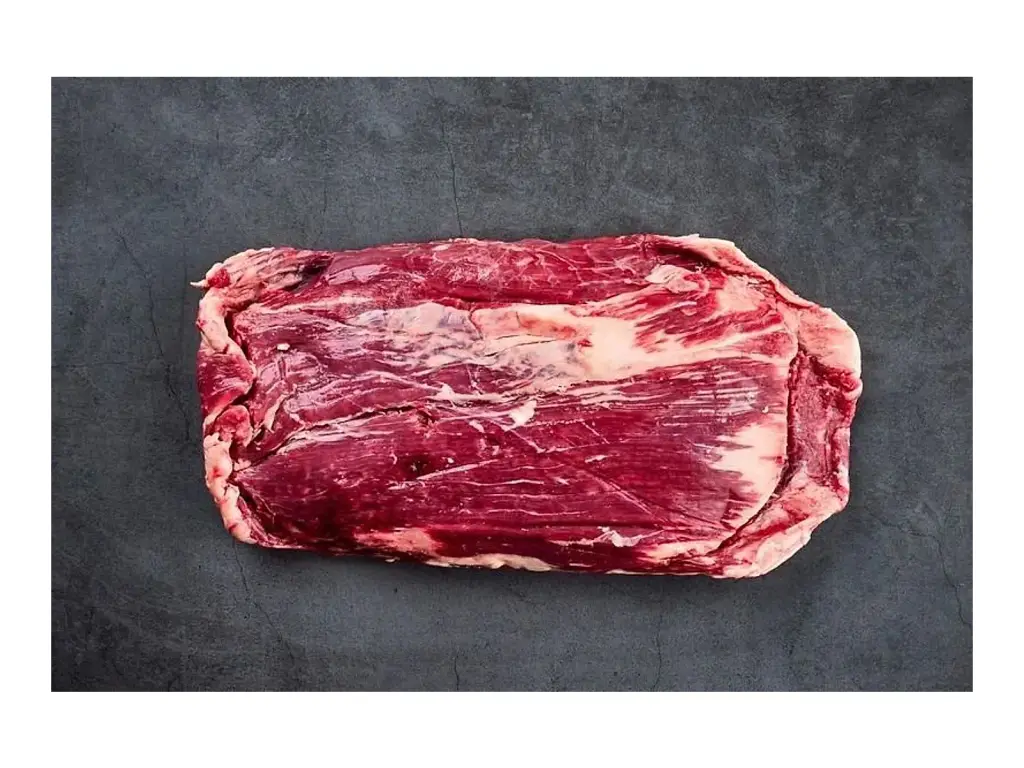
Bavette flank steak is one of the most flavourful cuts on the animal. Bavette is a French butchery term that has become fashionable on Australian restaurant menus, and for good reason. A beef bavette steak is loose-grained, beefy and full of juice, and it costs a fraction of the premium steaks. The catch is that "bavette" means slightly different cuts to different butchers, and it needs the right cooking and slicing to be tender. This guide clears up the confusion and shows you how to get the best from it.
What is beef bavette?
In French, bavette means "bib", a reference to its flat, apron-like shape. In France, bavette d'aloyau is the flap of meat from the bottom of the sirloin, while bavette de flanchet is from the flank. In English-speaking countries, the name is used for either the flank steak or the sirloin flap (also called flap meat), and occasionally for skirt. All three are flat, coarse-grained muscles from the underside of the animal, and they cook in very similar ways.
What they share is a pronounced grain that runs along the length of the cut, a good amount of flavour, and a texture that is tender when cooked medium-rare and sliced thinly across the grain.
Bavette cut beef vs flank and skirt
- Sirloin flap bavette: well marbled and loose, with a rich flavour and the most forgiving texture.
- Flank steak: leaner, thicker and more uniform, with very obvious long fibres. Ideal for marinating.
- Skirt: thinner and looser than both, with the most intense flavour. See our beef skirt guide.
When a recipe calls for bavette cut beef, any of these will work. In our range, flank steak is the closest match for the French bavette de flanchet, and chuck tail flap behaves very much like the well-marbled sirloin flap: loose, juicy and great on the barbecue.
Wagyu beef bavette
Wagyu beef bavette is prized by chefs because Wagyu's marbling makes an already juicy cut even richer. It is not something we list at the moment, but if you want the Wagyu experience in a fast-cooking steak, our Wagyu rump and Wagyu oyster blade steaks give a similar, deeply marbled result. See our Wagyu steak page for the full range and marble scores.
How to cook bavette
Bavette loves high heat and a short cooking time:
- Season generously with salt and pepper, or marinate for 1 to 6 hours.
- Heat a grill, barbecue or heavy pan until very hot.
- Cook for 3 to 5 minutes a side, depending on thickness, to medium-rare (52 to 55°C before resting).
- Rest for 8 minutes, loosely covered with foil.
- Slice thinly across the grain at a slight angle.
Do not cook bavette past medium. Its long fibres contract as they heat, so well-done bavette is chewy no matter how well you slice it.
Marinades for bavette
Bavette absorbs flavour quickly. Try olive oil, garlic, rosemary and lemon zest for a classic French bistro steak; soy, honey, garlic and ginger for an Asian-style grill; or lime, cumin, chilli and coriander for tacos. Avoid leaving it in very acidic marinades overnight.
Beef slices for sandwiches, salads and stir-fries
Because it slices so neatly, bavette is perfect for beef slices in steak sandwiches, grain bowls and salads. For stir-fries, slice raw bavette very thinly across the grain (partially freezing it for 20 minutes makes this easier) and cook it in batches over the highest heat. Or skip the knife work with our ready-cut beef stir-fry strips. For a cold salad, our Thai beef salad recipe works perfectly with bavette.
Bavette steak frites at home
For the bistro classic, cook the bavette as above, and while it rests, make a quick sauce in the same pan: sizzle a sliced shallot in butter, add 150 ml of beef stock and a teaspoon of Dijon mustard, reduce by half and finish with chopped parsley. Serve the sliced steak with oven chips or crisp pan-fried potatoes and a green salad.
What about minced beef from these cuts?
Flank and flap are lean, flavourful muscles, which is why butchers often send their trimmings to the mincer. If you want minced beef for burgers, sauces and meatballs, our premium beef mince and extra lean beef mince are ready to cook, and our beef meat patties recipe shows how to shape the perfect burger.
Beef bavette questions
Is bavette the same as flank?
Sometimes. In France, bavette can mean either the flank or the sirloin flap. In Australia, a bavette on a menu is usually one of those two cuts. They cook the same way.
Is bavette a cheap steak?
It is usually much cheaper per kilo than scotch fillet or eye fillet, which makes it one of the best-value steaks for flavour.
How thick should bavette be?
Most bavette is 2 to 3 cm thick. Thinner pieces cook in 2 minutes a side; thicker ones need 4 to 5 minutes a side.
Resting and carving bavette
Resting is not optional with thin, loose-grained steaks. As the steak cooks, the outer layers tighten and push juices towards the centre. Given 8 minutes on a warm plate, the fibres relax and the juices redistribute, so far less ends up on the board when you slice. Tent the steak loosely with foil; wrapping it tightly steams the crust and softens it.
To carve, first look at the surface of the cooked steak and find the direction of the fibres. With bavette they run along the length of the cut, so cut the steak in half crossways first, then turn each piece 90 degrees and slice thinly, holding the knife at a 45-degree angle. The angled cut gives wider, more tender slices. Pour any resting juices back over the meat before serving.
Bavette for a crowd
Because bavette cooks so fast, it is ideal for feeding a group without spending hours at the grill. Cook several pieces at once on a large barbecue, rest them together on a tray, and slice them onto a platter just before serving. Set out bowls of chimichurri, garlic sauce, salsa verde and pickled onions, plus warm flatbreads, and let everyone help themselves. Allow about 180 g of raw meat per person for a main course, or 120 g if there are plenty of sides.
Leftover slices are excellent cold the next day in a baguette with mustard and rocket, tossed through a grain salad, or quickly reheated in a hot pan for fried rice. Keep them covered in the fridge and use them within two days.
Where bavette sits on the animal
Beef flank part of cow is the belly, behind the ribs and in front of the back legs. Bavette is cut from the inside of the flank, near the sirloin, and it is a little looser in texture than a flank steak. Beef flank itself is the larger, leaner muscle next to it. Both have long, coarse grain and lots of flavour.
Our flank steak beef is trimmed and ready for the grill. Beef flank meat cut into thin strips makes beef flank strips for stir-fries and fajitas: slice across the grain, about 5mm thick. Searching for beef flank steak near me? We deliver chilled from Greenacre.
Flank compared with brisket, shank and substitutes
Beef flank vs beef brisket is a contrast between fast and slow: flank cooks in minutes, brisket in hours. Beef flank vs brisket in a sandwich is equally different: thin-sliced grilled flank, or smoked, sliced brisket. Beef flank vs shank is a similar story, because shank is a braising cut. Need a beef flank substitute? Skirt and hanger steak are the closest. The best beef flank alternative for a tender stir-fry is rump, sliced thinly.
Comparing steak prices
Bavette and flank are among the best-value steaks. When you compare the price of a steak, flank and bavette usually cost less per kilo than rump. The rump steak price is still good value for a more tender steak, and a black Angus steak is the step up for a special dinner. Every cut is certified halal by Halal Control Australia; see our halal beef range.
Bavette questions
How do I slice bavette?
Identify the direction of the grain: the long fibres run along the length of the steak. Cut across them at a slight angle, in thin slices. This makes each bite tender.
Does bavette need a marinade?
It does not need one, but it takes one well. Thirty minutes in oil, garlic and herbs is enough. Do not add acid for more than a couple of hours, or the surface turns mushy.
What is steak frites?
The French bistro classic: a pan-seared steak with a pile of thin fries and a little butter or sauce on top. Bavette is one of the traditional cuts used.
Buy halal beef online
Flank, chuck tail flap, Wagyu steaks and beef mince are all in our halal beef range, certified halal by Halal Control Australia and delivered chilled from Greenacre, Sydney, Australia-wide. Compare prices per kilo online, and read our beef onglet steak guide for another chef's favourite.